
 5 months ago
98
5 months ago
98
Fancy owning eccentric crooner Tiny Tim’s colourful suit? Or the Bob Dylan image that defined 1960s psychedelia? How about an early Mickey Mouse knitted doll?
These are some of the items on offer when the eclectic contents of Sydney artist Martin Sharp’s bohemian mansion, Wirian, are auctioned over two days in May.
Sharp, who died in 2013, shot to international Pop Art success in the 1960s with his vivid images of rock stars.
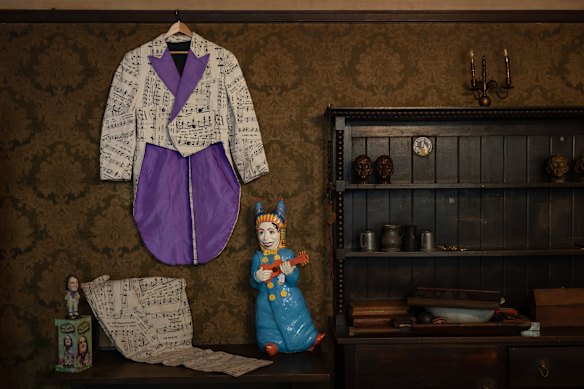
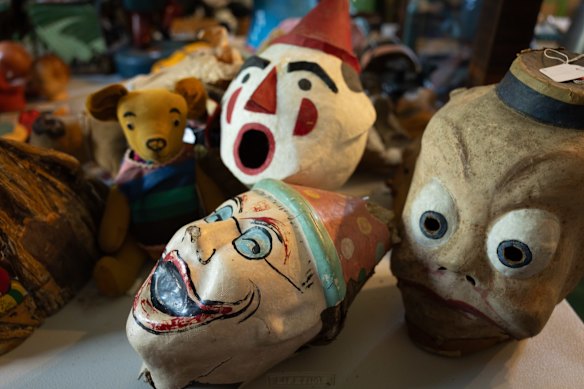
He filled his Bellevue Hill home with curios that fuelled his art, and turned a reception room into what he called the Dream Museum.
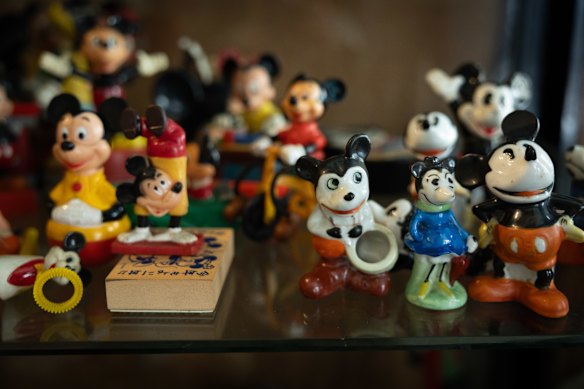
Inside, glass cabinets overflowed with items evoking his obsessions, including Sydney’s Luna Park, Mickey Mouse and the American falsetto singer Tiny Tim, for whom he created a tailcoat and pants of musical notes.
The sale of the nearly 500 items is expected to realise about $400,000, says auctioneer Andrew Shapiro, of Shapiro Auctioneers.
The sale is the prelude to the auction of the house. No date has been fixed for the sale of the Victoria Road home, valued two years ago at $33 million.
Money from the sale of the contents and house will provide scholarships for artists.
Sharp was known primarily for his posters, prints and collages, but several of his original paintings will be up for auction.
The biggest ticket item is his Babylon the Great is Fallen, is Fallen. Revelations 18 v.2, expected to fetch $60,000-$90,000. The buyer will need plenty of wall space to hang the 184 cm by 280 cm work.
The auction includes works from across Martin’s life, says Roslyn Sharp, the artist’s cousin and a director of the charitable Martin Sharp Trust which is overseeing the auction.
“We’ve put together a curated collection from his school days to the last years of his life.”
Sharp wanted Wirian preserved as an artists’ residency, a place that would foster awareness of his work and the significance of his chief obsessions, Luna Park and Tiny Tim. Under the provisions of Sharp’s will, a trust was established to do this.
Despite more than a decade of effort, realising Sharp’s dream has proved impossible. His dream bumped up against the reality of an estate asset rich but cash poor. Attempts to attract a philanthropist or a cultural institution to step up have not materialised.
Roslyn Sharp says she and Sandy Sharp, also a cousin and a director, have tried to stick to the spirit of Martin’s wishes.
“They can take that piece of Martin and know they are contributing to people getting an artistic opportunity,” she says.
Works by Sharp’s artist friends, including Mirka Mora, Peter Kingston, Peter Powditch and Garry Shead, are among those to be sold in the auction.
Sharp rarely held formal gallery shows. When a visitor to art-filled Wirian once asked when Sharp was having an exhibition, the artist’s response was: “You’re sitting in it.”
The auction, by Shapiro Auctioneers, will be held over two days in three categories: artworks, the Dream Museum, and decorative items and furniture.
“Going into Wirian is like an archaeological dig,” says Shapiro. “You’re looking at three layers, three generations in that house.”
A rare Wedgwood bust of Mercury as well as artworks by Joy Hester and Donald Friend likely belonged to Sharp’s predecessors, as did much of the Jacobean Revival oak furniture made especially for the house.
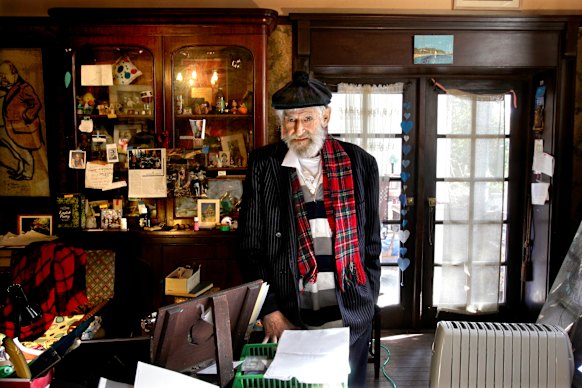
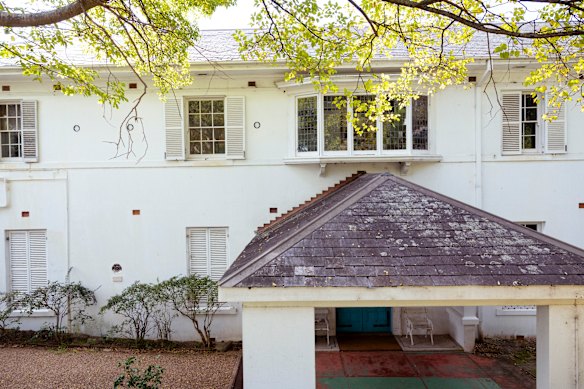
Sharp, an only child, inherited Wirian from his maternal grandparents, prominent industrialist Stuart Ritchie and wife Vera. The 1923 Arts and Crafts-style mansion had been their home from the mid-1930s.
Sharp moved into Wirian after his grandmother’s death in 1976, and the mansion became the centre of his bohemian life.
There, he oversaw a creative hothouse similar in spirit to his Swinging London years at Chelsea’s The Pheasantry and later the Yellow House in Kings Cross. All were filled with art, music and people.
At Wirian, you might bump into Marianne Faithfull, Eric Clapton – his former London flatmate – or Bob Geldof as well as local artists and itinerant eccentrics. His door was always open.
Sharp retained his grandparents’ furniture and continued to use the kitchen’s original green and cream Kookaburra gas stove (also in the auction).
The dining room became his studio, where he painted, entertained and smoked around his grandparents’ dining table, invariably strewn with papers, coffee cups and overflowing ashtrays.
Sandy Sharp says he is optimistic about the trust’s future and the contribution of Martin Sharp’s legacy to Australia’s cultural life.
“It’s the beginning of a new chapter,” he says.

















































