 3 months ago
33
3 months ago
33
Nayera Abdallah, Menna Alaaeldin, Samy Magdy and Jon Gambrell
March 29, 2026 — 5:12pm
The risk of an expanded Iran war has grown as additional US forces reached the Middle East and Yemen’s Iran-aligned Houthi rebels launched their first attacks on Israel since the start of the conflict, raising fears of a wider threat to global shipping.
The first of two contingents of marines arrived on an amphibious assault ship, the US said on Saturday. According to the Washington Post, the Pentagon is preparing for weeks of ground operations in Iran, possibly involving raids by Special Operations and conventional infantry forces, though whether President Donald Trump will approve the plans remains uncertain.
Meanwhile, the launch on Saturday by Yemen’s Iran-backed Houthis of what they described as a “barrage” of missiles towards Israel raised new concerns of further disruption to global trade already hit by the effective closure of the Strait of Hormuz.
Israel, which regularly faced missile attacks from the militant group before the war, confirmed two missiles had been fired at it from Yemen. Both were intercepted, the Israeli military said, and there were no reports of casualties or damage.
However, the Houthis have shown an ability to strike targets far beyond Yemen and disrupt shipping lanes around the Arabian Peninsula and the Red Sea, as they did in support of Hamas in the Gaza war. About 12 per cent of global trade passes through the Red Sea, which has the southern entrance to the Suez Canal.
The Saudi Arabian port of Yanbu, which the kingdom is using to bypass Hormuz for its oil exports, is also well within the range of Houthi missiles.
In a statement, the Houthis said they would continue to “carry out their operations in the coming days until the criminal enemy ceases its attacks and aggression”.
The London Telegraph reported, citing a former Pentagon official, that the Houthi attack was likely to lead to US strikes on Yemen to ensure the safety of Red Sea shipping, fuelling an expansion of the war.
The now one-month-old conflict has spread across the Middle East, killing thousands and hitting the global economy with the biggest-ever disruption to energy supplies.
Two liquefied petroleum gas tankers and two bulk carriers headed out of the Gulf on Saturday, according to vessel tracking data, suggesting an approved route indicative of Tehran’s tightening grip on marine traffic. Iran’s parliament is reportedly working on a draft bill that would impose a fee on vessels seeking safe passage through the narrow waterway.
With the US midterm elections due in November, the increasingly unpopular war has weighed on Trump’s Republican Party. He has appeared eager to end it soon, while also threatening escalation.
Demonstrators took to city streets across the US on Saturday in anti-Trump rallies described by organisers as a call to action against the war on Iran.
Ground forces give options
As speculation mounted about a possible ground operation, Secretary of State Marco Rubio said Washington could achieve its aims without ground troops, but that it was deploying some soldiers to give Trump “maximum” flexibility to adjust strategy. Thousands of paratroopers from the US Army’s 82nd Airborne Division are expected to join their marine counterparts in the region.
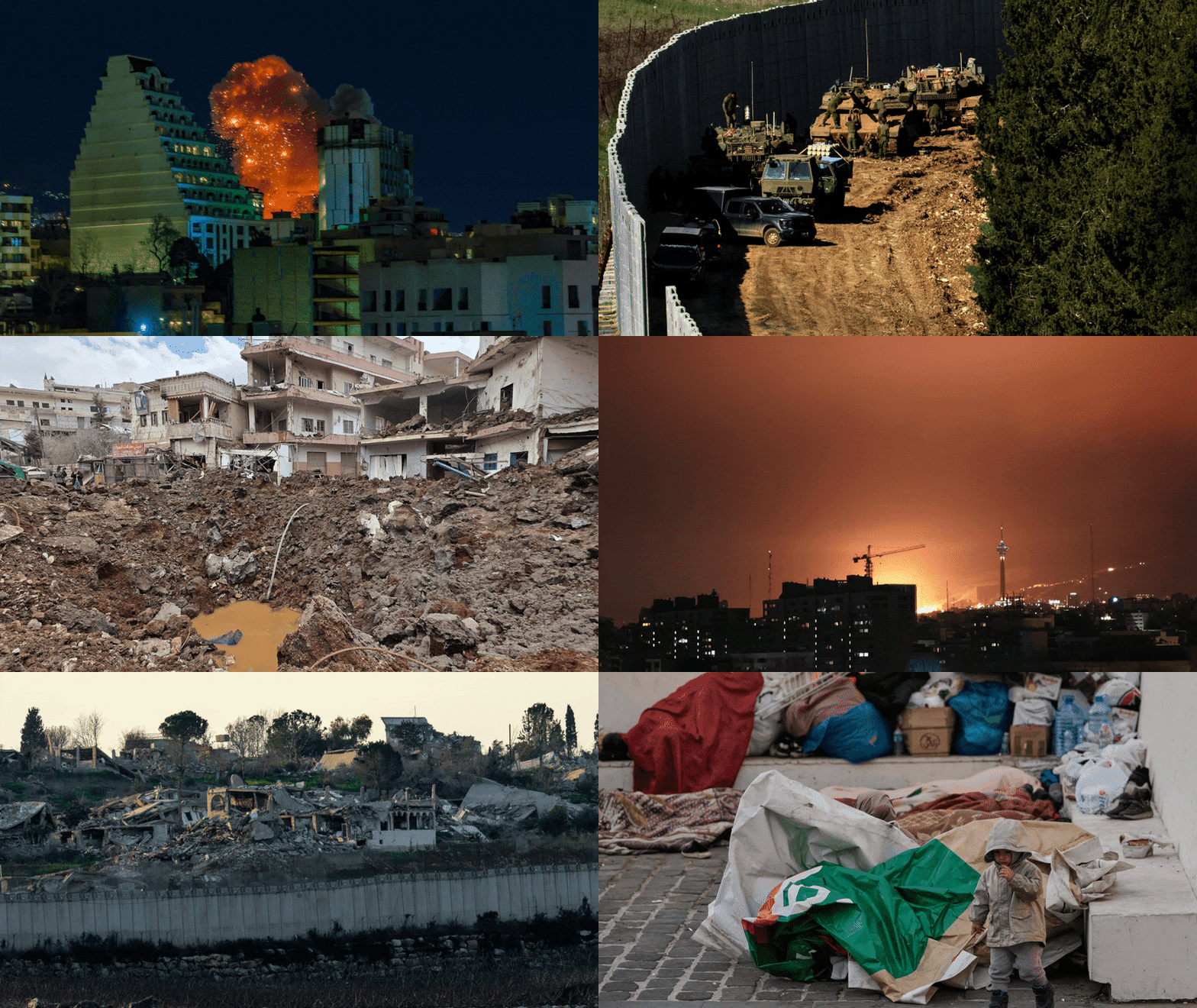
Tehran was hit by further waves of airstrikes over the weekend, causing damage to residential areas and civilian facilities, including a major university, the New York Times reported.
Residents of the capital described particularly intense waves of attacks on Friday night into Saturday, with loud explosions heard across the city. The US-based Human Rights Activists News Agency said it recorded at least 701 strikes across Iran on Saturday, among the highest numbers in a single day since the war broke out.
The Israeli military said it had completed a “wide-scale wave of strikes” targeting naval and military infrastructure in Tehran that were part of a “broader phase aimed at deepening the damage to the core systems” of Iran’s government.
The Israel Defence Force also confirmed the death of a soldier in southern Lebanon, raising the total to five Israeli soldiers killed there since the conflict with Hezbollah reignited on March 2.
Meanwhile, Israel on Sunday said it activated its air defences after detecting missiles launched from Iran, while Iranian attacks were also reported in multiple areas across the Gulf, including Kuwait and the United Arab Emirates.
According to the BBC, the United Arab Emirates witnessed the highest number of ballistic missile attacks in weeks, with a major aluminium plant in Abu Dhabi hit and significantly damaged, and several employees injured.
Aluminium Bahrain, one of the world’s largest aluminium producers, was also struck, the BBC reported, while the radar system at Kuwait’s international airport has been extensively damaged.
The attacks followed the Iranian strike on a major US airbase in Saudi Arabia on Friday (Saturday AEDT) that injured 12 US military personnel, two of them seriously, in one of the largest breaches of American air defences so far.
Diplomatic efforts to ease tensions continued in the background, as Iranian President Masoud Pezeshkian spoke to Prime Minister Shehbaz Sharif of Pakistan, which hosted talks on Sunday with the Turkish and Saudi foreign ministers.
Iran has agreed to let an additional 20 Pakistani-flagged vessels pass through the Strait of Hormuz, with two ships permitted to transit daily, Pakistan’s Foreign Minister Ishaq Dar said. Separately, Thailand and Malaysia said they had also secured assurances that their ships would be given safe passage.
Trump has threatened to hit Iranian power stations and other energy infrastructure if Iran does not fully open the Strait. But he extended a deadline he had imposed for this week, giving Iran another 10 days to respond.
AP, Reuters, Bloomberg
Get a note directly from our foreign correspondents on what’s making headlines around the world. Sign up for our weekly What in the World newsletter.