 3 hours ago
3
3 hours ago
3

Updated July 10, 2026 — 1:11pm,first published 12:55pm
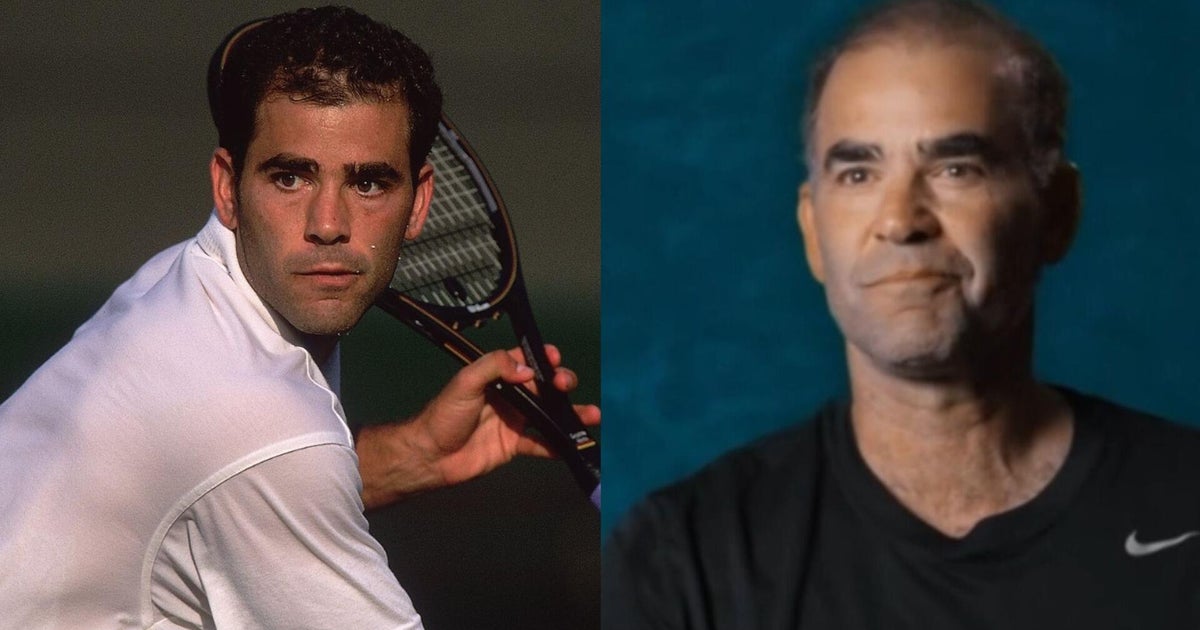
Veteran broadcaster, bon vivant and sometime senator Derryn Hinch has died, aged 82, after a long battle with a series of infections arising from a bad fall last year.
Melbourne radio station 3AW confirmed the news on Friday afternoon, saying on air that Hinch had “died at home in his own bed as he wanted”.
In an interview with A Current Affair in November, Hinch claimed he had had 30 falls in the preceding 12 months, one of which left him lying on the floor of his St Kilda Road apartment for 12 hours before help arrived.
He suffered two broken ribs in that incident in September, and the after-effects lingered for the rest of his life, sending him back to the nearby Alfred Hospital for multiple extended stays.
In his frequent posts on Facebook, Hinch kept his friends and followers apprised of his health (declining) and his diet (tending to the mushy) while maintaining as much of an upbeat attitude as a man who had endured cancer treatment, heart surgery, an infected leg, and a liver transplant could muster.
Hinch’s final Facebook post came just hours before his death. It was a photograph of his brother, captioned with: “A casual pic of my brother Des who is usually very earnest.”
As news of Hinch’s death broke on Friday afternoon, the post attracted a stream of comments lauding him as a “fighter” and “inspirational”.
“That’s life” was his famous sign-off during decades on television and radio. And death, in his view, was an unavoidable part of it.
“This would be a great place to cark it,” he said of his balcony overlooking the grounds of Melbourne Grammar. “Sitting in that chair, staring at the clouds. Goodnight nurse, goodbye world.”
Scathing though he was of politicians, Hinch considered being a senator one of the greatest achievements of his long, storied and frequently controversial career. And no longer being a senator, after he failed to be re-elected at the 2016 poll having served a single half term of three years, was one of his greatest disappointments.
“Being voted out was one of the most terrible days of my life,” Hinch told ACA’s Martin King last year.
For a while, Hinch was perhaps better known via caricature than for his actual career, thanks to Steve Vizard’s parody of him on Fast Forward, where the eyebrow-jerking, fast-talking, squawking, twitching Hunch, as he was known, did his best to incite outrage with every monologue.
Nonetheless, the real man’s career was long and noteworthy.
Born in New Plymouth, New Zealand in 1944, Hinch began in journalism at The Taranaki Herald in his hometown aged just 15.
Three years later, he moved to Sydney, joining The Sun, the afternoon tabloid sibling of The Sydney Morning Herald. It was the start of a long stint with the Fairfax group that took him to New York for 11 years, where he ended up as bureau chief, before returning to Sydney in 1976 to edit The Sun.
It was on radio, though, where Hinch really found his voice, literally and figuratively, moving to Melbourne to host the morning show on 3XY in 1978 before jumping to rival 3AW the following year.
After eight years as one of the talk station’s major draws, he moved to television in 1987, where “the mouth from the south” as he was known to northern viewers (and “the beast from the east” to those in WA) met with mixed success. The short-lived panel show Beauty and the Beast was followed by the humbly named Hinch (first on Seven, later on Ten), and a short spell as host of Nine’s The Midday Show.
Hinch was never short of an opinion, and even less often short of the energy required to express it, in print, on screen, on air – in whatever format was available to him. He published more than 20 books (many of them memoirs), was podcasting until 2022, and was still penning the occasional article until late last year.
Though he was frequently depicted as a shock jock, Hinch’s views weren’t easily characterised as overtly, or only, right wing. He supported Indigenous rights, though voted no in the referendum; he advocated for animal rights, though ate meat; he was a tireless campaigner for harsher prison sentences for paedophiles and men found guilty of violent crimes against women; he backed a hard-line law-and-order approach, but the two members of his Justice Party who served in the Victorian Parliament from 2018 to 2022 voted with the Andrews government more often than not.
He was, in short, a complex, sometimes contradictory, often curmudgeonly presence in public discourse, and he will be missed. That’s life.