 3 months ago
45
3 months ago
45
If you were to order a side of chips at Infinity by Mark Best, the fine dining restaurant on the revolving 81st floor of the Sydney Tower, it would cost you $17. But what you would receive is very different from any potato chip you’re likely to find at your local fisho, pub or restaurant.
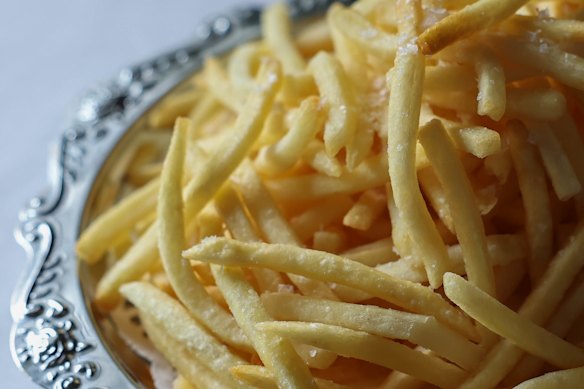
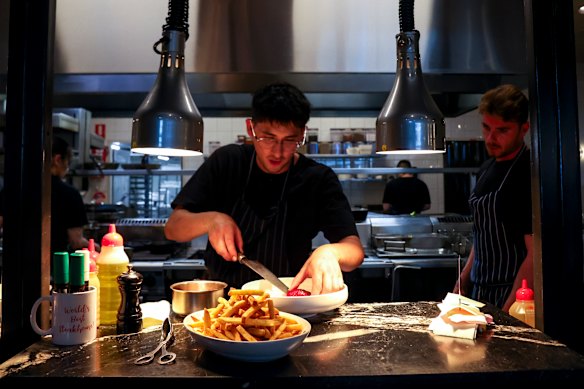
These chips are made from sebago potatoes, harvested from a Southern Highlands farm, and sugar-tested to ensure a nice, even cook. They are meticulously hand cut to 1.5 square centimetres, steamed at 100 degrees to create the optimal soft, fluffy interior, then blanched in olive oil at 160 degrees — and that’s just the prep.
Once the kitchen receives your order, each chip is fried in wagyu beef tallow until it develops a crisp, golden crust, then dusted with malt vinegar powder and salt (a nostalgic nod to executive chef Mark Best’s favourite supermarket chips, Smiths’ Salt & Vinegar).
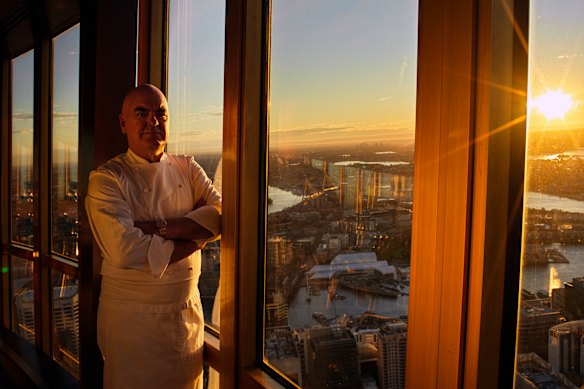
“[Chips] bring a sense of comfort to the table, but that does not mean they should be done casually,” said Best. “The price reflects the labour involved, the cost of the ingredients including the tallow, the level of the menu they sit within, and the broader operating costs of the restaurant.”
In 2026, the saying “cheap as chips” doesn’t mean as much as it used to. While hot chips remain one of Australia’s favourite foods, and consistently crowned most-ordered dish by Uber Eats, prices have risen across the board – from frozen chips at the supermarket to the upper echelons of fine dining.
Restaurant reviews, news and the hottest openings served to your inbox.
Despite the hefty price-tag, Mark Best does not serve the most expensive side of fries in the country. Rather, you can find those at Merivale restaurant Mimi’s, where “shoestring chips, tarragon mayonnaise” is listed for $20.
The upmarket restaurant, in the eastern Sydney suburb of Coogee, broke the $20 price ceiling within the past 12 months – an increase of more than 40 per cent since 2020 when the same dish was $14. Merivale did not respond to requests for comment.
“It seems like restaurant chip prices have been sprinting rather than creeping,” said Good Food Guide editor Callan Boys.
“I suspect restaurateurs everywhere have been waiting for someone to break the $20 chip barrier, like when Quay’s main courses tipped $50 in the late nineties and provided a green light for other fine-diners to raise their prices.”
While high prices may be justified when the potatoes are sourced seasonally, hand-cut and served with house-made condiments, Boys said the promise of easy profit could lead some restaurants to cut corners — charging unreasonably high prices for bulk-buy, frozen shoestrings.
“It’s one of reasons the steakhouse model has become so popular. The big money is made on the sides and booze,” he said.
Restaurants awarded a hat in the 2026 editions of The Age and The Sydney Morning Herald Good Food Guides have yet to serve a side of fries for $20, but they’ve come close. (Mimi’s was excluded from the 2026 Good Food Guide after this masthead published allegations of sexual harassment and exploitation at Merivale restaurants.)
The price of chips has increased by 50 per cent, from $13 to $19.50, over the past six years at Donovan’s, a one-hatted restaurant at the St Kilda beachfront in Melbourne. The restaurant did not respond to requests for further information.
‘It seems like restaurant chip prices have been sprinting rather than creeping.’
Good Food Guide editor Callan BoysIn Sydney, two-hatted CBD steakhouse Rockpool Bar & Grill charges $18 for a side of hand cut chips − 80 per cent more than in 2020 when it was just $10. A side of chips at Rockpool Bar & Grill Melbourne is also $18.
“Every chip at Rockpool is hand cut and goes through a multi-step process before it reaches the plate,” said Rockpool executive chef Santiago Aristizabal.
“It’s a fair bit of work for something that looks simple, but that’s the point. The humble chip might seem straightforward, but doing it properly takes time, care, and good ingredients.”
Chipflation isn’t exclusive to fine dining. In 2026, a bag of frozen chips costs an average of around $4.80 at Coles and Woolworths ($3.80 at Aldi), a regular serving of Macca’s chips is more than $4, and the average price of minimum chips at fish and chip shops in Melbourne and Sydney is around $6.50.
At the pub, the average punter is likely to pay between $10 and $12 for a side of fries, and up to $23 for a large serving at the Prince Alfred Hotel in Richmond, Melbourne.
“No doubt you will be seeing this everywhere,” said Scott Leach, publican at the Rose of Australia in Erskineville, Sydney. Like many pubs, the Rose sells two tiers of chips: a side (fries with rosemary salt, among the city’s most affordable at $4), and a larger sharing portion (more than double in size, with vegan truffle mayo, $14).
Value is front of mind, said Leach, but there are other factors to consider when determining price: the quality of the fries purchased, the oil used, the electricity required, and the wages (and penalty rates) for people who cook and serve them.
“It’s difficult as a small stand-alone business … competing with larger groups,” Leach said. “[They] have sharper pricing that flows into cheaper retail pricing.”
Price hikes begin at the potato farm and continue throughout the supply chain. Restaurant owners, such as Mia Coady-Plumb at one-hatted Bar Magnolia in Melbourne’s Brunswick, and Corey Costelloe at one-hatted 20 Chapel in Sydney’s Marrickville, said the rising prices of oil and potatoes dealt a blow to their bottom line.
Farming costs rose to record levels over the past five years, according to AUSVEG reports, but that isn’t the reason for pricier potatoes. Independent producers such as Jon Hill of Hill Family Farming in the NSW Southern Highlands and Richard Hawkes of Hawkes Farm on Victoria’s Mornington Peninsula absorbed more than their fair share of hikes to the cost of fertiliser, electricity and fuel.
“All that’s more than doubled,” said Hill. “But what we’re getting paid [doesn’t cover it] … we’re not making enough out of it, it’s only an existence.”
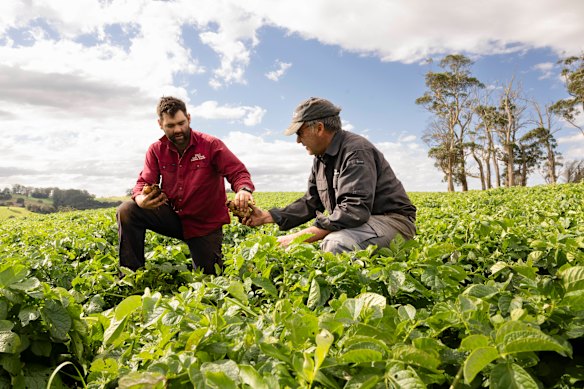
Despite a short-lived boost during a weather-related supply shortage late last year, Hawkes said big volume buyers have kept contract prices steady. “In one particular case, there’s a potato chipmaker that’s lowering prices,” he said. “The margins most farmers are making are pitiful ... the people making the money are the middlemen.”
Both Hill and Hawkes diversified to survive, and now sell direct to restaurants. Hawkes also serves hot chips from his Boneo farmgate. “They’re a loss-leader, but they encourage people to come to the farm, and they usually walk out with some potatoes and other products,” he said.
Then comes the cost of labour. Transforming a bag of seasonal potatoes into the fluffy-on-the-inside, golden-crunch-on-the-outside, British-style chips at Northern Soul Chip Shop in Melbourne’s St Kilda takes years of research, and four hours of cleaning, peeling, cutting and triple-frying every day. It’s a significant investment, given the 18 per cent increase in the minimum award wage since the business opened in 2020.
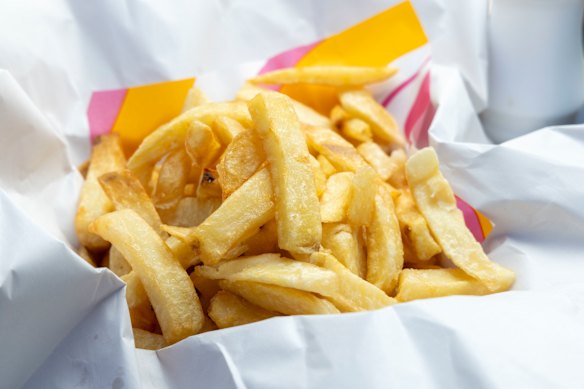
“We try to do this one thing as best as we possibly can,” said co-owner Joe Grimshaw. “We have to charge what we feel it’s worth [$8-$12], and that’s more because of all the labour … and the machinery we’ve had to buy.”
Frozen chips offer a solution for restaurants where fries are an accompaniment, rather than a speciality.
“When Bar Magnolia opened three years ago, I resisted putting [chips] on the menu, but we had such a demand for them that I had to!” said Coady-Plumb, who freezes her own fries, priced at $10 a serve. “They’re now a mainstay.”
20 Chapel owner-chef Corry Costelloe said: “The average diner doesn’t care if fries are hand cut, they just want a crunchy, well-seasoned fry. Our fries are bought frozen and pre-cut ... so we can keep them at $12.”
They’re among the cheapest chips at a hatted Sydney restaurant, but they’re still not as popular as the $18 wedges that Costelloe and his team spend two days of cutting, bringing, poaching, chilling and twice-frying.
“When we explain the process to our customers they get it,” he said. “Word got out, and they are definitely a signature dish.”
Gary Mortimer, a professor of consumer behaviour and retail marketing at Queensland University of Technology, said diners will continue to fork out for fries so long as they see value beyond the bowl of deep-fried potatoes.
For one diner, that might mean spending $18 at 20 Chapel to brag about trying the fanciest wedges in town; for another, it might mean spending $19.50 at Donovan’s to enjoy a side of fries at a legendary restaurant by the beach.
“You’d think that no one in their right mind is going to pay $50 for a bowl of chips, but if it’s at an exclusive restaurant, that’s one night only, with limited seats and a celebrity chef like Heston Blumenthal … people would pay,” said Mortimer.
“As consumers, we’re not rational. If we were, we’d always buy the cheapest product, the cheapest car, and the cheapest groceries, but we don’t.”