 3 months ago
45
3 months ago
45
If the international oil trade has an oracle it is Daniel Yergin, the author and analyst who won a Pulitzer prize for his sweeping history of the modern oil industry, The Prize: The Epic Quest for Oil, Money and Power.
He took his title from Winston Churchill, who as first lord of admiralty in the years leading up to WWI had converted the Royal Navy from a fleet driven by coal, of which Britain had abundant supplies, to one powered by oil, which lay beneath Persian sands. This was a mad gamble at the time.
“To commit the navy irrevocably to oil was indeed to ‘take arms against a sea of troubles’,” said Churchill, with Shakespearean flourish. Should it succeed though, British naval dominance would be assured. “Mastery itself was the prize of the venture,” as he put it.

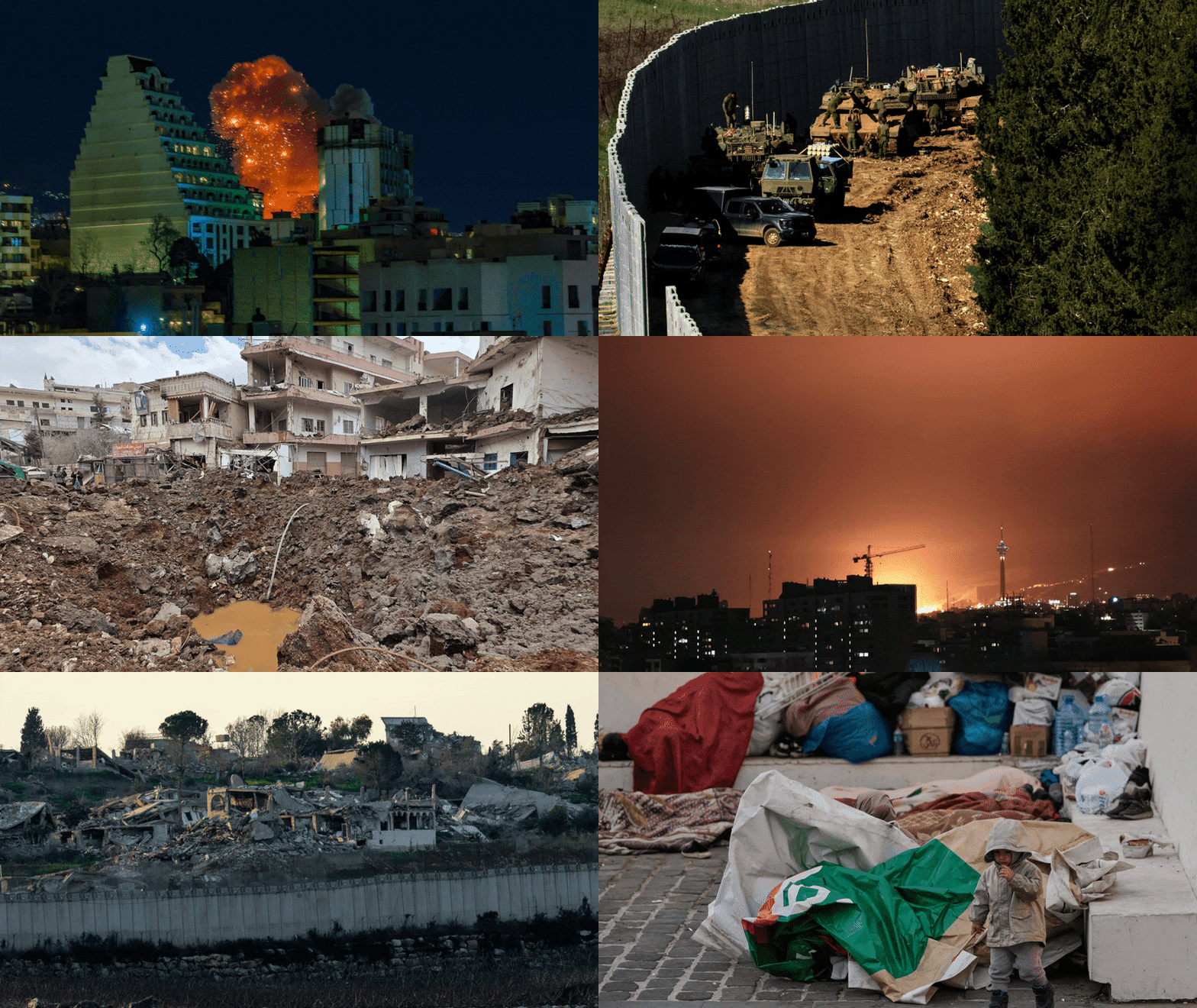
In the decades that followed, British and then American pursuit of oil would reshape what became Iran, which is now using the world’s oil dependence as its most potent weapon against another wave of foreign aggression.
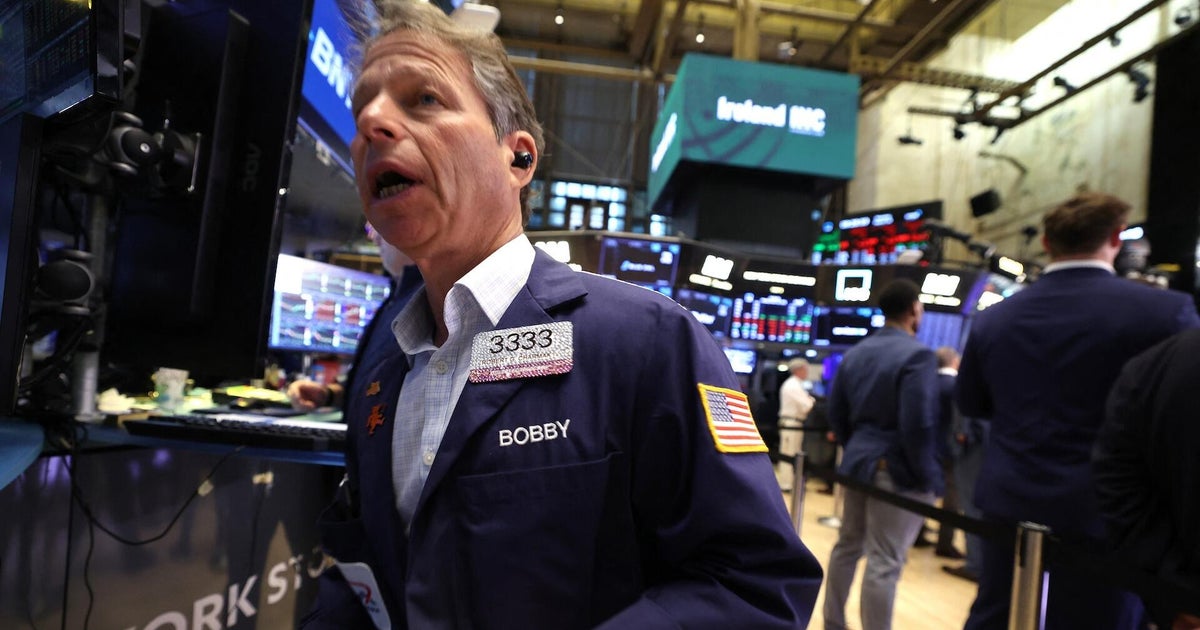
This week Yergin was holding court at CERAWeek, the annual conference he founded that is now known as the “Davos of Energy”. There oil industry executives fretted over a spectre that Yergin had written about days earlier, that the “nightmare scenario” of the prolonged closure of the Strait of Hormuz to the 20 per cent of global oil and gas supplies that flow though it might be upon them.
“The fear? That this will result in skyrocketing energy prices that send the world economy plummeting into a deep recession,” wrote Yergin. Later he would tell Axios that the nightmare had not yet been fully realised. That would befall the world if the war “persists longer than weeks”.
It will be a month old on Saturday.
That Iran would and could close the strait was of little surprise to any armchair strategist on Earth, except apparently Donald Trump and his Secretary of War Pete Hegseth. After all, the world has watched flights of Iranian-made Shahed drones thrum over Ukraine to wreak havoc on energy infrastructure and cities alike since Russia’s full-scale invasion in 2022.
With no warning of the attack to friends or allies, Trump had left world leaders with little to reassure their anxious populations as prices soared.
When should we panic?
As the violence drags on, Australians are demanding to know how their government plans not only to address the economic shock, but how it will maintain the most basic elements of our society – our personal mobility, our capacity to work, to grow and harvest food, to move it to our supermarkets.
“Farmers can’t farm, truckies can’t truck, and miners can’t mine,” Opposition Leader Angus Taylor said to Albanese in question time on Thursday. What did the government plan to do it about?
On Friday, Albanese and Energy Minister Chris Bowen for the first time held a press conference together on the issue, seeking to calm nerves and stave off panic buying. They reiterated that every shipment of liquid fuel destined for Australia remains en route. There is as much liquid fuel in the nation today as there would have been in normal circumstances.
The six scheduled ships cancelled or deferred since the war began have been replaced and three additional shipments secured, they said, repeating earlier statements. In addition, six cargo loads of jet fuel were on their way to Australia, “which is the normal level to be expected at this time, none of them have been cancelled”, said Bowen.
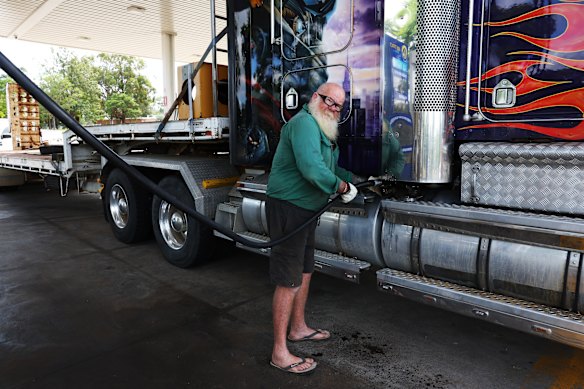
“The government has always acknowledged there are real and unacceptable shortages in regional Australia, as the demand has spiked so much,” he said, adding that he had tapped the national fuel reserve to increase supplies to the regions, the equivalent of around six days of national fuel use.
Bowen and Albanese stressed that Australia’s role as a gas supplier was to the national benefit, particularly as Malaysia, which depends on Australian gas, had announced the night before that its tankers would be allowed to sail through the strait.
“Our gas exports are very important in the region,” said Albanese. “Australia is a reliable supplier. We expect reciprocation in our economic relations.”
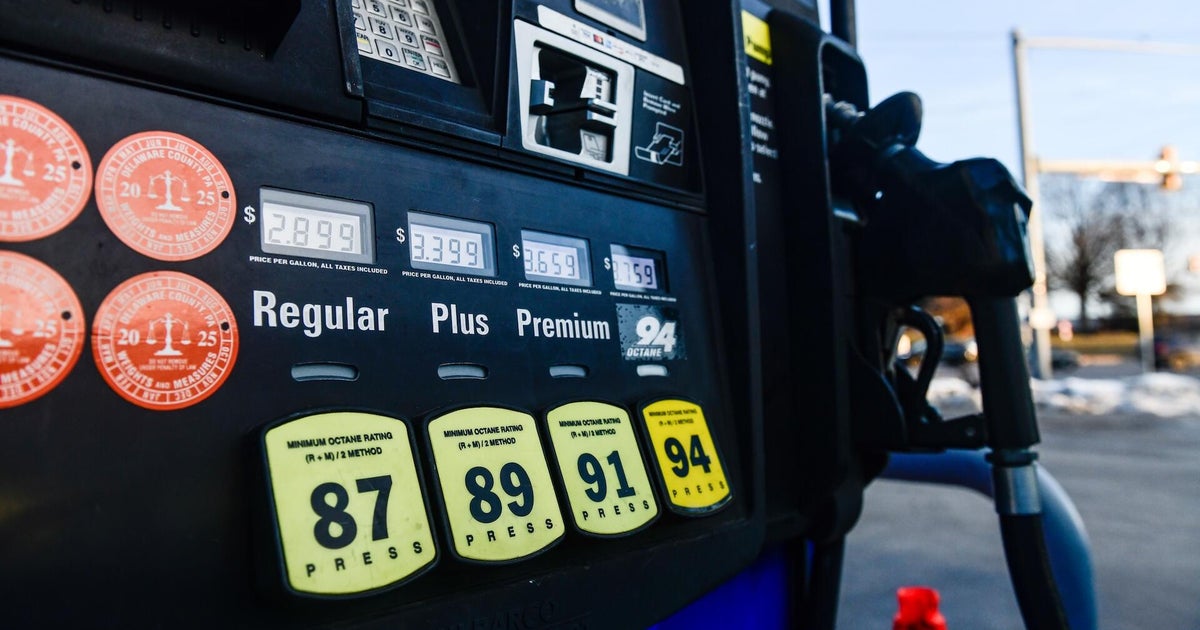
But as was made clear this week, the threat of a shortage is as bad as an actual one. As households and businesses stocked up over recent days many service stations ran dry, if only for short periods. Bowen had the figures at hand during question time in parliament on Thursday. That day 7 per cent of NSW service stations were without diesel and 2 per cent had no fuel at all, he said. In Victoria, the figures were 3 per cent and 4 per cent.
What Bowen and Albanese and their state colleagues have not explained so far is what they plan to do if the war bleeds on and supply remains tight. Will they ration access to fuel? If so, how, and when, and by how much? What are the trigger points? What should we be watching watch for?
The government does not yet have answers to some of those questions, though it may on Monday when the national cabinet gathers.
Preparing for that meeting, NSW Energy Minister Penny Sharpe told this masthead, “The local impacts of the war in the Middle East are currently cost and distribution, as supply remains steady. In our scenario planning, a key indicator will be the continued arrival of supply ships.”

As this masthead reported earlier this week, constraints will bite deeper at the end of April when the Asian refineries that deliver 80 per cent of Australia’s supply exhaust their inventories. Speaking on 3AW during the week Victorian Energy Minister Lily D’Ambrosio said both federal and state governments had powers to curtail fuel supply, but that it was crucial that they acted in concert.
“If we need to have other levers pulled over the coming weeks … it is really important that we have a national response. Fuel knows no boundaries. If a state acts alone and puts restrictions in place you could find the perverse outcome that fuel distributors take supply to another state.”
COVID scar tissue
In the vacuum of information anger is rising at a prime minister with a reputation for abundant caution.
“I don’t think the government does urgency well, and I don’t think they understand what a risk mitigation strategy is all about … that is, planning for the inevitable,” the Independent Food Distributors Australia chief executive Richard Forbes told Sky News.
Unsurprisingly, former treasurer Wayne Swan, who along with former Labor prime minister Kevin Rudd crafted the famously fast and bold national response to the global financial crisis of 2008, is more sympathetic.

People, he says, are demanding simple answers to complex questions and misinformation is spreading fast. Political populism, social media, and scar tissue among voters to COVID measures have made governing during crisis far harder, he says.
“In the GFC, people were recognising it was a complex problem. No one knew where it was going. But at the moment, there’s no room for anyone to say that.”
Even when a plan is finalised, it may well be that governments chose to withhold critical information. After all, says Swan, signalling when measures to curtail fuel sales might kick in may only exacerbate panic.
In the meantime, the market itself is doing its brutal work.
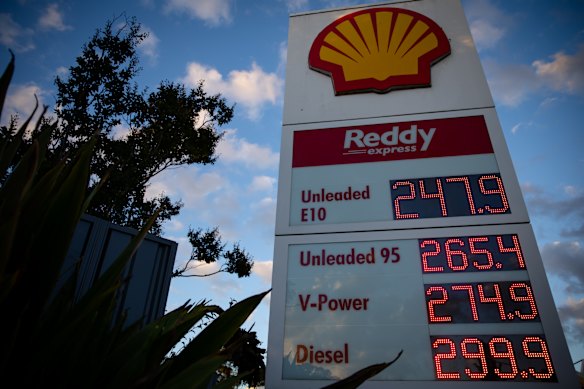
“As much as it may not be pleasant, sky-high prices are telling consumers and businesses that if you really want to use petrol or diesel, then you’re going to pay through the nose for it,” this masthead’s senior economic correspondent, Shane Wright, wrote on Thursday, using the sort of plain talk that prompts allergic responses among politicians. “It’s telling people who believe that 4X4 utes the size of small countries are their god-given right that there are cheaper-to-run alternatives, be they smaller fuel-powered cars or EVs.”
Measures in, measures out
This week Bowen declared that a national fuel emergency response plan extracted from the government under freedom of information laws by the former crossbench senator Rex Patrick was out of date. Instead, reporters asking what measures the government might consider were pointed to a list of measures laid out by the International Energy Agency, whose executive director, Fatih Birol, happened to be visiting Australia this week, telling ABC television that the world was facing the greatest energy crisis in history, with 11 million barrels a day drained from supply.
The IEA’s suite of measures that governments might use to cut fuel consumption include everything from encouraging working from home to reducing highway speed limits, to backing EV adoption. Bowen and Albanese have so far ruled out the former and celebrated progress on the latter. “I don’t think there is anyone out there today who has bought an electric vehicle who’s regretting the decision at this point in time,” Albanese said on Friday.
Chaotic signalling from the White House has not made the Albanese government’s messaging or planning any easier. During a US cabinet meeting on Thursday, Trump’s special envoy, Steve Witkoff, said the president’s “preference is always peace and that we should make that our priority”, while Hegseth declared the United States would continue “negotiating with bombs”.
“I have no idea what they are trying to do,” Politico quoted an Asian diplomat as saying after the meeting.
Whatever happens next, there is universal agreement that prices will not fall at once even if the war ends soon. Gas infrastructure in the region has been damaged and the gap in the oil supply cannot be plugged quickly. With storage facilities full, production has been stifled and the 11 million barrels of oil Birrol refers to cannot be suddenly magicked into the market.
“Prices rise like a rocket, fall like a feather,” Mark Zandi, the chief economist for Moody’s Analytics told The New York Times.
Greg Bourne was a young drilling engineer working for BP in the Gulf in 1973 when he witnessed the first oil shock. He went on to work closely with Lord John Browne of Madingley, the chief executive who tried and failed to have the company diversify into renewables. Bourne went on to serve as an energy advisor to Margaret Thatcher, before forging a second career as a member of the pro-renewables Climate Council in Australia.
Having witnessed a string of energy crises over the years, he fears the fallout of this one, and he resents that the oil companies that so fiercely lobby the world’s governments against transitioning to renewables make out like bandits each time an energy crisis caused by the global addiction to fossil fuels clobbers our economies.
The industry has ploughed serious money into lobbying governments to maintain its dominance, even as the technologies we need to transition to renewables to reduce our dependence on oil have become available, he says.
“Their message to a politician is: [the transition will] fail, and it’ll fail on your watch, and you’ll have to be the one that stands up and be counted for it. So trust us. Trust us. We’ll be right.’”
Bourne believes that in the months and years to come the oil industry will discover that it no longer holds our trust.
Start the day with a summary of the day’s most important and interesting stories, analysis and insights. Sign up for our Morning Edition newsletter.